In today’s rapidly evolving work landscape, the ability to work remotely has become increasingly essential. With the rise of digital technologies, many companies are embracing remote work models, allowing their employees to work from the comfort of their own homes or from anywhere in the world. To ensure productivity and seamless collaboration, it’s crucial to equip remote employees with the right remote work tools. This article explores the essential remote work tools that can significantly enhance productivity and foster successful remote teamwork.
Understanding Remote Work and Its Importance

Defining Remote Work
Remote work, also known as work from home, refers to a work arrangement where employees can work outside of a traditional office environment. This can involve working from a home office, a co-working space, or any location with internet access. Remote work allows individuals to work remotely and maintain productivity while enjoying greater flexibility and autonomy. Embracing a fully remote setup requires specific work tool configurations to facilitate effective workflow and communication.
The Rise of Work From Home Trends
The trend of work from home has seen a significant rise in recent years, driven by technological advancements and a growing desire for improved work-life balance. More companies are recognizing the benefits of supporting remote workers, leading to increased adoption of remote work policies. This shift has been further accelerated by global events, prompting organizations to invest in essential remote work tools to maintain business continuity and enhance productivity among their remote employees and distributed teams.
Benefits of Remote Work for Productivity
Remote work offers numerous benefits that can positively impact productivity. Without the daily commute, team members gain valuable time that can be dedicated to focused work. A flexible schedule allows remote employees to tailor their work hours to align with their peak productivity times. Moreover, the comfort of a personalized workspace can reduce stress and enhance concentration. Effective communication platform usage and project management tool integration are essential to leverage these benefits fully and ensure team communication remains seamless, even when physically separated.
Key Tools for Remote Work

Essential Remote Work Tools Overview
To facilitate a productive and efficient work from home experience, selecting the right remote work tools is paramount. These essential tools enable remote employees to maintain a seamless workflow, irrespective of their physical location. A combination of remote desktop tools, communication platforms, and project management tool capabilities ensures that team members can collaborate effectively and stay connected. Effective tools for working remotely create a virtual workspace that mirrors the functionality of a traditional office, fostering a collaborative environment that promotes productivity and successful remote outcomes. Investing in these software tools is essential for supporting remote and hybrid teams.
Best Tools for Effective Communication
Effective communication is the cornerstone of any successful remote team. Communication platforms like Slack and Microsoft Teams offer real-time messaging, file sharing, and video conferencing features, allowing remote workers to stay connected and collaborate efficiently. Zoom and other video conferencing solutions enable face-to-face interactions, fostering a sense of team camaraderie and facilitating clearer communication. The best tools for remote communication ensure that team members can easily share updates, brainstorm ideas, and address concerns promptly. Leveraging a reliable communication platform is vital for maintaining team communication and fostering a productive work environment.
Collaboration Software for Remote Teams
Collaboration tools are essential for enabling distributed teams to work together seamlessly on projects and tasks. Project management software, such as Asana or Trello, helps teams organize tasks, assign due dates, and track progress. Cloud storage solutions like Google Drive facilitate easy file sharing and version control, ensuring that team members can access and collaborate on documents in real-time. These collaboration tools enhance productivity by streamlining workflows, improving communication, and fostering a collaborative environment, irrespective of geographical location. With the right remote work tools, project management becomes more transparent, and team members can efficiently manage projects and stay aligned with project goals, enhancing productivity and helping maintain a healthy work-life balance. Remote work offers numerous benefits when supported by effective collaboration tools.
Home Office Setup for Maximum Productivity

Choosing the Right Home Office Equipment
Setting up an effective home office is essential for maximizing productivity when engaging in remote work. The right remote work tools extend beyond software; appropriate physical equipment is key, including these important elements:
- A reliable computer and high-speed internet access.
- A comfortable chair, quality monitor, and ergonomic keyboard and mouse.
Consider accessories like a printer, scanner, and noise-canceling headphones. These essential tools transform your workspace into a productivity hub, allowing remote team members to focus and work from home without distractions. Effective home office setups boost productivity significantly.
Creating an Effective Workspace
An effective workspace is crucial for maintaining productivity and fostering a sense of professionalism while working remotely. Designate a specific area in your home solely for work to create clear boundaries between your professional and personal life. Optimize the space by ensuring adequate lighting, minimizing clutter, and personalizing it with plants or inspiring decor. The right remote work tools also include physical organizers to keep your desk tidy. By creating an organized and comfortable workspace, you enhance focus and reduce distractions, leading to improved productivity and a better work-life balance for remote worker situations.
Ergonomics and Comfort in a Remote Office
Ergonomics and comfort are vital considerations when setting up a remote office to ensure long-term health and productivity. Several key elements contribute to an ergonomic workspace, including:
- An ergonomic chair that provides proper lumbar support and adjustability.
- A monitor positioned at eye level to prevent neck strain.
Using a wrist rest to minimize the risk of carpal tunnel syndrome is also helpful. Taking frequent breaks to stretch and move around can also alleviate physical discomfort. Prioritizing ergonomics helps support remote employees’ well-being and prevent injuries, allowing for sustained productivity and effective remote work without compromising health. These essential tools are vital for any workspace setup.
Software Tools for Remote Work Efficiency
Project Management Software
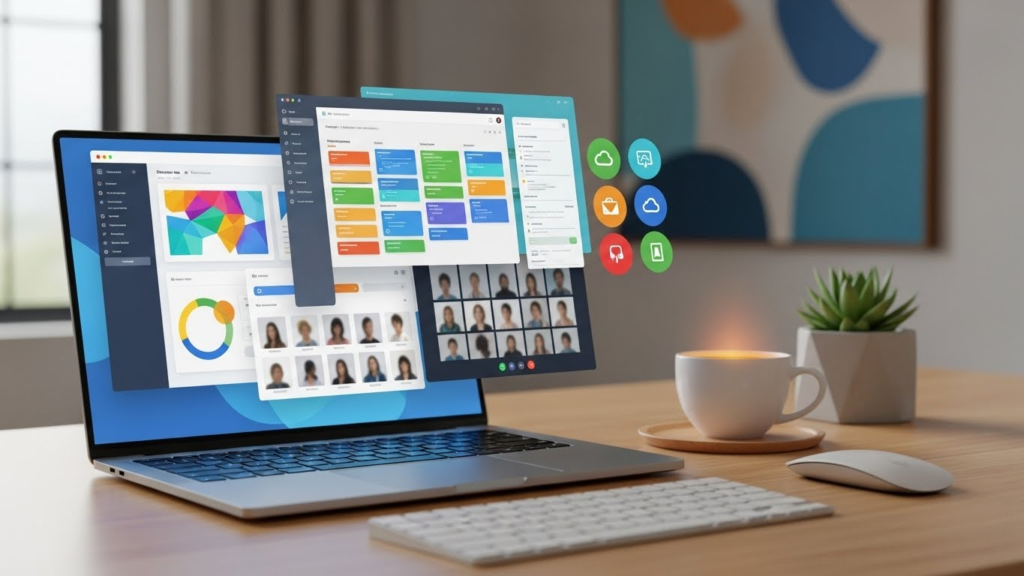
Project management software is indispensable for remote teams as it enables seamless collaboration and efficient task management. Tools like Asana, Trello, and Jira provide a centralized platform to organize tasks, assign due dates, and track progress in real-time. Features such as Gantt charts, Kanban boards, and progress reports enhance visibility and accountability. Effective project management tools ensure that team members are aligned on goals, deadlines, and responsibilities, enhancing productivity and facilitating successful project delivery. These tools for working remotely are essential for streamlined workflow and effective team communication, especially for distributed teams.
Time Management Tools
Effective time management is crucial for maintaining productivity and preventing burnout when working remotely. Time tracking software, such as Toggl Track or Clockify, helps remote employees monitor how they spend their work hours, identify time-wasting activities, and optimize their schedules. These time management tools provide insights into productivity patterns, enabling individuals to prioritize tasks, allocate time effectively, and maintain a healthy work-life balance. By leveraging these essential tools, remote workers can improve focus, meet deadlines, and achieve greater efficiency in their remote roles, thereby enhancing productivity for remote employees and successful remote initiatives.
Essential Software for Remote Collaboration
Remote collaboration hinges on the right remote work tools that facilitate seamless interaction and teamwork among distributed teams. Communication platforms like Slack and Microsoft Teams offer real-time messaging, file sharing, and video conferencing capabilities, ensuring constant connectivity. Cloud storage solutions like Google Drive and Dropbox enable easy file access and version control. Screen sharing software enhances collaboration by allowing team members to demonstrate tasks or provide feedback visually. These essential tools bridge geographical gaps and foster a collaborative environment that promotes productivity, innovation, and successful remote work outcomes. Video conferencing and tools for file sharing boost productivity for remote worker performance.
Future of Remote Work Tools and Trends

Emerging Tools for Remote Workers in 2025
Looking ahead to 2025, several emerging remote work tools are poised to reshape how remote employees collaborate and maintain productivity. Expect advancements in virtual reality (VR) and augmented reality (AR) to create immersive collaborative workspaces. The use of AI-powered assistants will streamline tasks and manage schedules, enhancing productivity. Enhanced cybersecurity tools will protect remote work environments. These essential tools will support remote teams by providing enhanced security and streamlined work processes, ensuring successful remote initiatives. As technology evolves, the best tools for remote work will become even more integrated and intuitive.
Integrating AI into Remote Work Tools
Integrating artificial intelligence (AI) into remote work tools is set to revolutionize productivity and efficiency. AI can automate repetitive tasks, freeing up remote employees to focus on more strategic work. Intelligent project management tools can predict potential roadblocks, optimize workflows, and ensure project deadlines are met. AI-driven communication platforms can filter out unnecessary messages and prioritize important conversations. The incorporation of AI in software tools enhances productivity by streamlining operations and providing personalized assistance, supporting a better work-life balance for remote worker success and fully remote engagements.
Best Practices for Choosing Remote Work Tools
Selecting the right remote work tools involves careful consideration of your team’s specific needs and workflows. Start by assessing your team communication requirements and project management needs. Evaluate tools based on ease of use, integration capabilities, and security features. Seek feedback from your remote workers about which tools enhance their productivity. Ensure the chosen tools for working remotely align with your company’s IT policies and budget. A well-thought-out selection process ensures that these essential tools effectively support remote employees and foster successful remote collaborations. With the right remote work tools, team communication thrives.
FAQs About Remote Work Tools
What are the best tools for remote work?
The best tools for remote work typically include communication platforms like Slack and Microsoft Teams, project management tools like Asana or Trello, and cloud storage solutions such as Google Drive. Video conferencing tools like Zoom and screen sharing software are also essential. These software tools enable remote teams to stay connected, collaborate effectively, and maintain productivity, regardless of their physical location. The right remote work tools are crucial for successful remote initiatives and supporting remote employees.
Here are some of the tools that can boost team productivity:
- Communication platforms
- Project management software
- Cloud storage solutions
How can I improve my productivity while working from home?
Improving productivity while working from home involves several strategies. Create a dedicated workspace free from distractions. Use time management tools to track your work hours and identify time-wasting activities. Set clear goals and prioritize tasks. Take regular breaks to avoid burnout and maintain focus. Leverage essential remote work tools for communication, collaboration, and project management. By implementing these practices, remote employees can enhance productivity and achieve a better work-life balance, optimizing their performance and fully remote efficacy.
Set clear goals, create a dedicated workspace, and use time management tools.
Which software is essential for remote teams?
Essential software for remote teams typically includes communication platforms for real-time messaging and video conferencing, project management tools for task organization and tracking, and cloud storage solutions for file sharing and collaboration. Additionally, remote desktop tool options and cybersecurity software are vital for securing remote work environments and ensuring team communication remains secure. These software tools facilitate seamless collaboration, enhance productivity, and support the unique needs of distributed teams. Leveraging the right remote work tools is essential for successful remote teamwork.
Communication platforms, project management tools, and cloud storage solutions.